
Sentinel of Dublin Bay
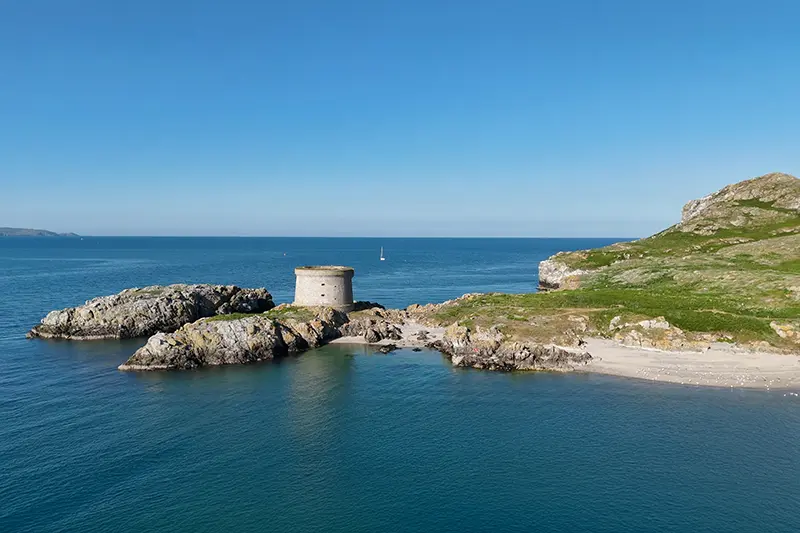
Ireland’s Eye is a small, uninhabited island just north of Howth Head whose history reflects both early settlement and later strategic use. Archaeological evidence suggests activity from prehistoric times, while in the early medieval period the island was associated with monastic life, with ruins of a church, Cill Mac Neasáin, dating from around the 6th–8th centuries. During the Viking Age, the surrounding waters were the scene of Norse activity and conflict, including a reputed battle in 902 that helped drive Vikings from Dublin.
In later centuries the island lost its religious importance and remained largely uninhabited, serving mainly as a navigational landmark and occasional refuge for fishermen, and today it is best known for its wildlife, particularly seabird colonies, and as a prominent feature of Dublin Bay’s maritime heritage.
The Timeline
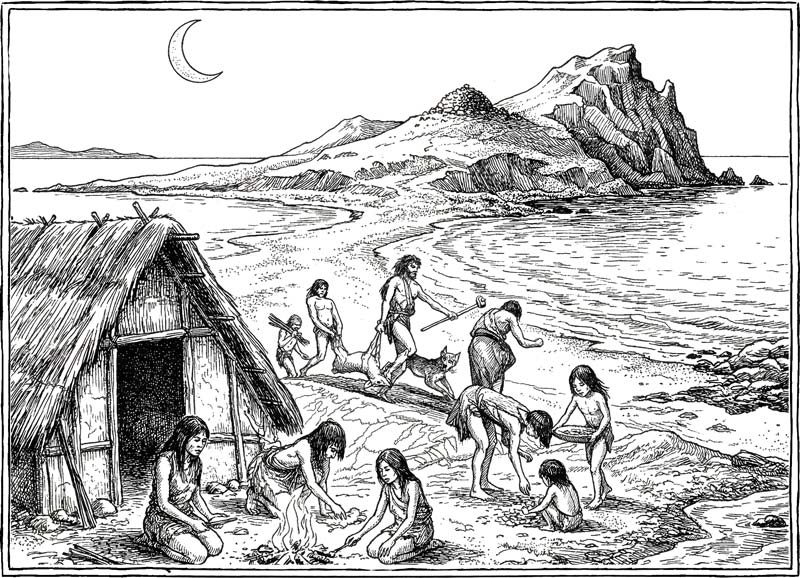 When the nearby Howth peninsula was still a true island separated by a shallow channel, Ireland’s Eye likely served as a vital base for hunter-gatherers who exploited the rich coastal resources of Dublin Bay.
These hunter-gatherers, possibly associated with legendary Tuatha Dé Danann, inhabited the area around Howth eight thousand years ago. They named the peninsula Binn Eadair, Eadairs Peak. They worshipped the moon goddess Danù. Eadair was an important female who chose the peak as her eternal resting place.
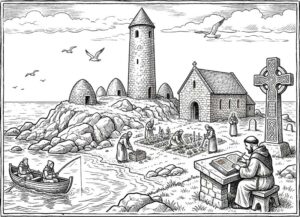 Ireland’s Eye was an important early Christian site known as Cill Mac Neasáin, founded by the sons of Nessan around the 7th century. A small monastic community lived on the island and is traditionally linked to the production of the Garland of Howth, an early Gospel manuscript now held in Trinity College Dublin. The island served as a religious centre until services gradually moved to the mainland due to its exposed location.
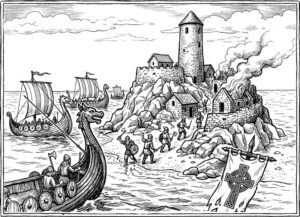 During the Viking Age, Ireland’s Eye and the surrounding Dublin Bay were affected by Norse raids. The Vikings established their first base on the east coast of Ireland at Lambay Island in 794 ce and in 814 ce they took Howth and remain to this day. The name Howth replaced the name Binn Eadair. Howth means “ Head” in old Norse and that is how it appeared on their charts. They also renamed the island Eriùs Øy from the goddess Eriú, from whom Ireland comes and the old norse for Island Øy.
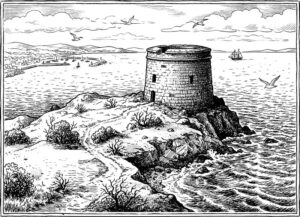 Martello Towers were built along the East Coast of Ireland during the Napoleonic Wars as part of a coastal defence system. The Martello Tower on Ireland’s Eye was built around 1803 protecting Dublin Bay. Positioned to overlook Howth Harbour, the tower was intended to guard against a French invasion. It remains one of the island’s most prominent landmarks today.
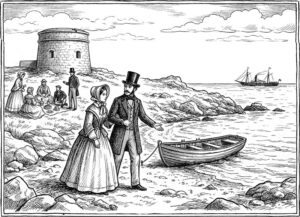 In the 1800s, Ireland’s Eye became a popular destination for day trips from Dublin. The island also came to public attention following a high-profile murder case. In 1852 Sarah Maria Louisa Kirwan died following a day trip to Ireland’s Eye. Her husband, William Burke Kirwan, initially claimed she had drowned while swimming. Based on circumstantial evidence he was convicted of her murder.
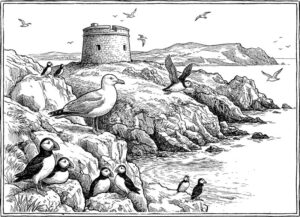 Today, Ireland’s Eye is protected for its internationally important seabird colonies and natural habitats. Designated as a Special Protection Area and Special Area of Conservation, the island is actively managed to balance wildlife protection with public access, ensuring it remains a vital natural and cultural landmark.
