Ireland’s Eye Locals
Just a short boat trip from Howth Harbour, Ireland’s Eye is one of the most important wildlife islands on Ireland’s east coast. Its cliffs, grasslands and surrounding waters support thousands of seabirds, coastal plants and marine life. Because of this, the island is protected as both a Special Protection Area (SPA) and Special Area of Conservation (SAC). Ireland’s Eye is best known as a major seabird breeding site, particularly important because east-coast seabird colonies are relatively rare compared to the Atlantic west coast.
A Living Island
Ireland’s Eye is not just a place to visit — it is a living, working ecosystem. By respecting the wildlife, you help ensure that seabirds, seals and plants continue to thrive here for generations.
Island HistorySeabirds
Why Seabirds Matter?
- Seabirds are indicator species: their health reflects the condition of fish stocks and marine ecosystems.
- Ireland’s Eye supports thousands of breeding pairs, making it vital at a national and EU level.
- The island provides safe nesting cliffs free from foxes and other mainland predators.
Puffin
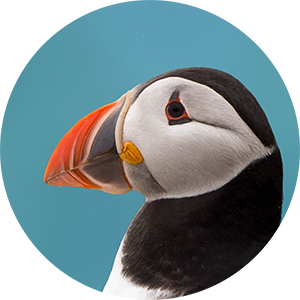
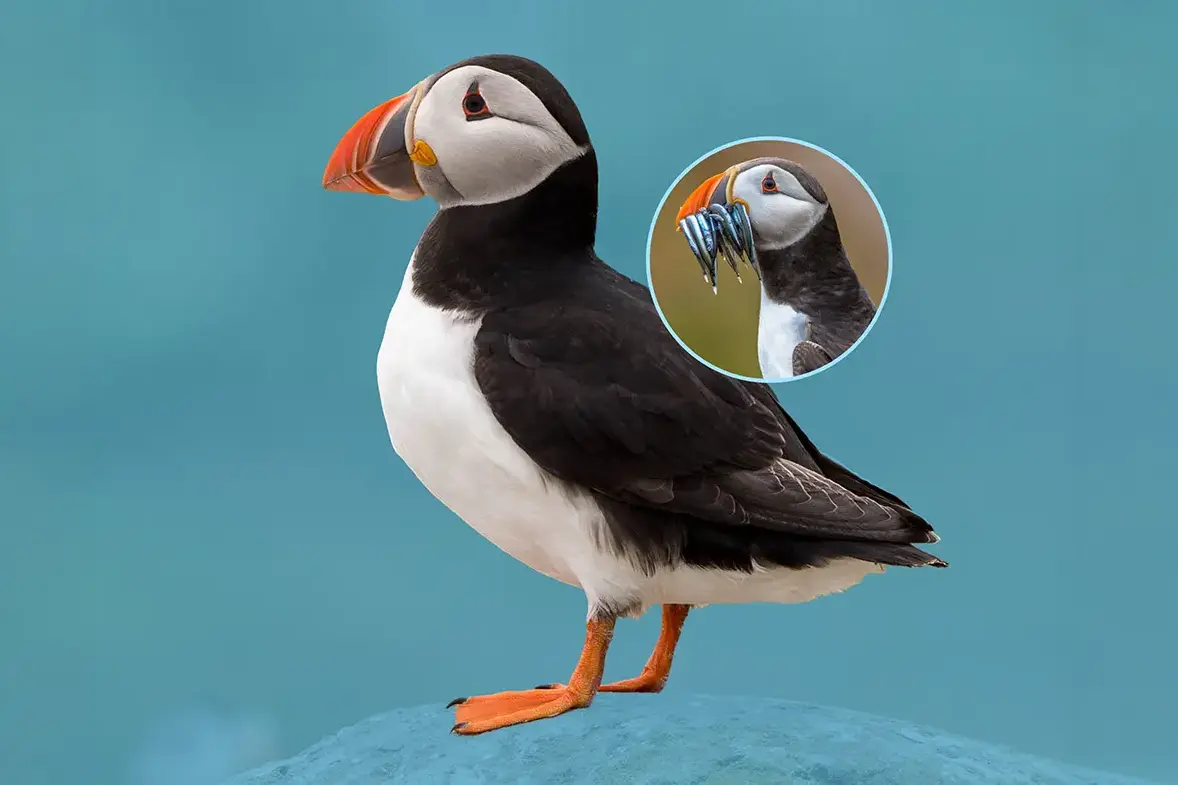
Irish Name: Puifín Scientific name: Fratercula Arctica Bird Family: AuksBeautiful puffins are a regular summer visitor to the Ireland’s Eye cliffs, arriving from March to September. In Autumn they travel to the middle of the North Atlantic and then on to the Arctic Ocean for the winter. They stay on the open ocean, floating on the sea in large groups called rafts. These Irish puffins can clock up to 4,700km on long return flights across the Atlantic to breed off the Irish coastline every year.
- Puffins develop multi-coloured bills for mating season.
- They can flap their wings up to 400 times a minute.
- Their bills can grasp up to 12 fish at once.
Razorbill
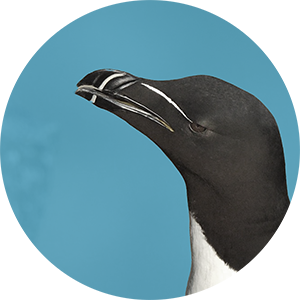
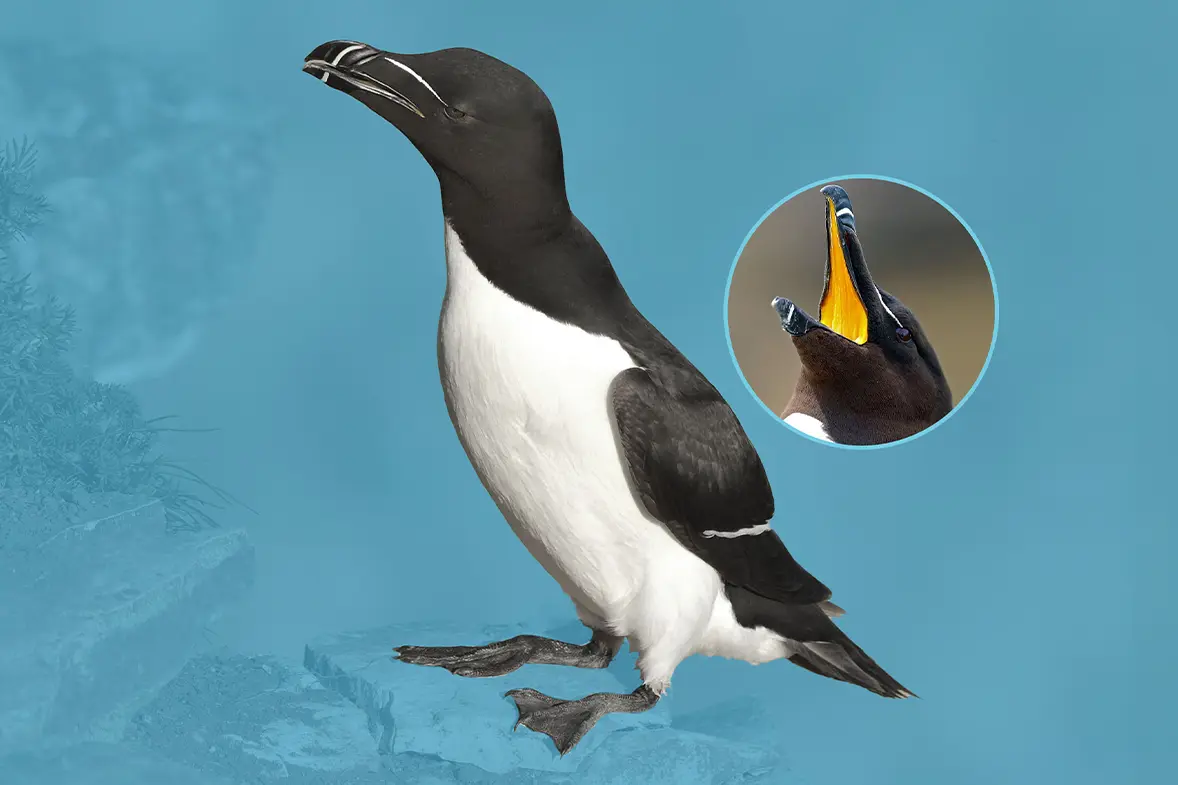
Irish Name: Crosán Scientific name: Alca Torda Bird Family: AuksA medium-sized auk, razorbills are black across their head and back, with a white underside throughout the summer months. Similar to the guillemot in size and shape, they can be distinguished by their stocky, wedge-shaped bill which sports a thin white stripe from top to bottom. These distinctive seabirds typically nest on narrow rocky ledges of coastal cliffs, where they lay a single egg during the breeding season. They are excellent divers.
- Razorbills are monogamous and mate for life.
- Amazing diving abilities, reaching depths of up to 140m.
- They are the only auks with distinctive yellow inside bill.
Cormorant
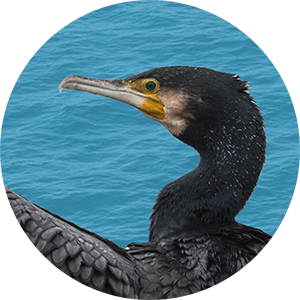
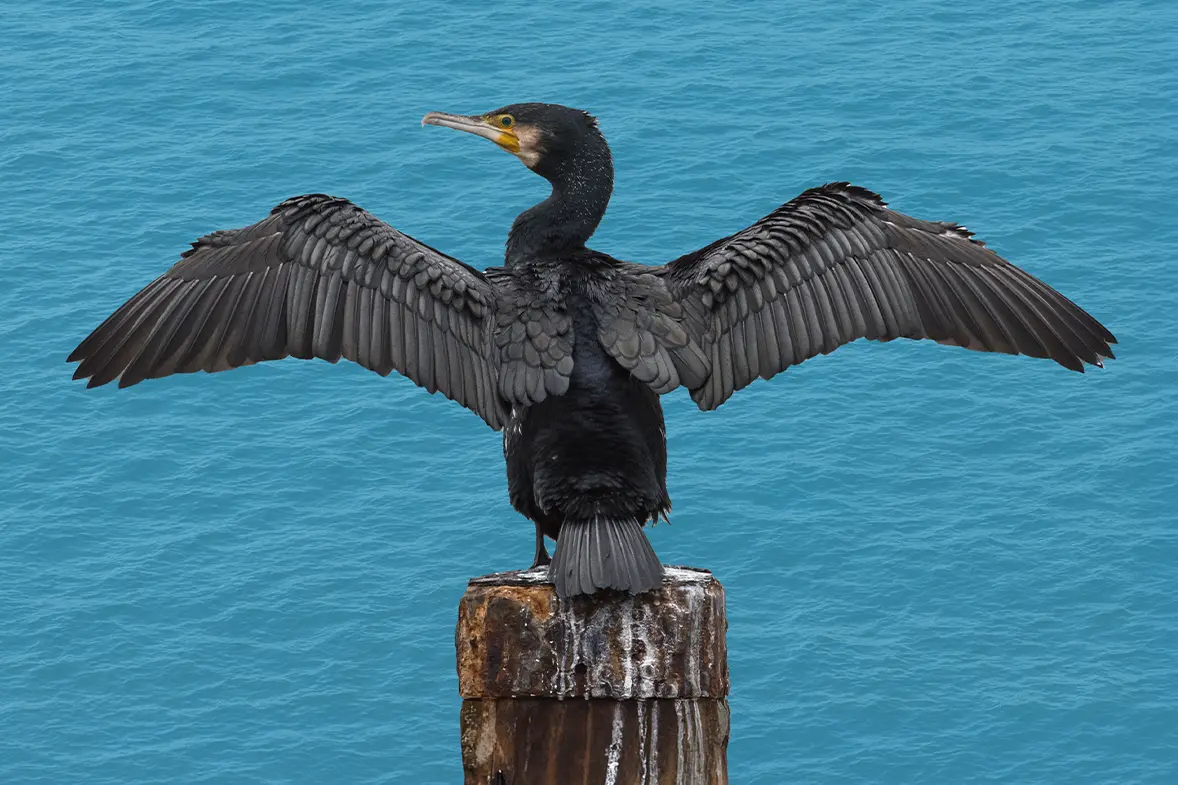
Irish Name: Broigheall Scientific name: Phalacrocorax Carbo Bird Family: CormorantCormorants are expert fishers with unique diving abilities, consuming large quantities of fish and living in diverse environments. They are social birds, often gathering in large colonies for breeding and nesting. Easily confused with the shag, cormorants are larger in size and sport a bright white patch on their face and thigh during breeding season. They often stand on rocks with wings spread wide to dry their feathers after diving.
- Cormorants can dive up to 25 meters deep.
- They need to spread their wings to dry after diving.
- Wingspan of 145cm.
Gannet
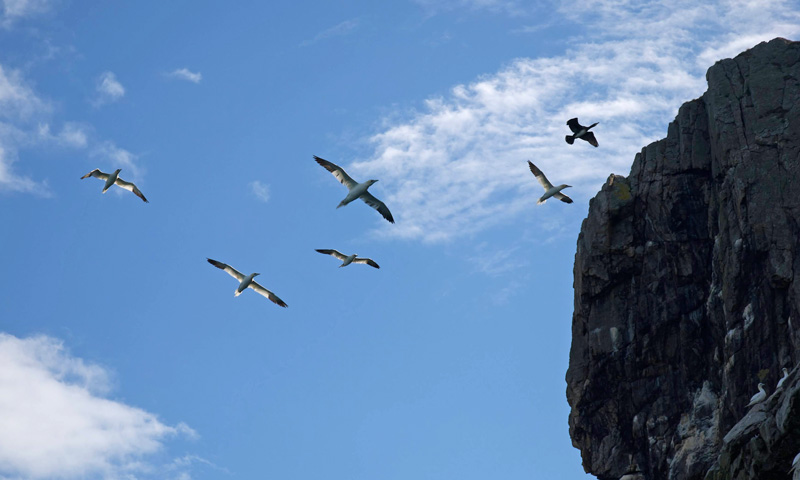
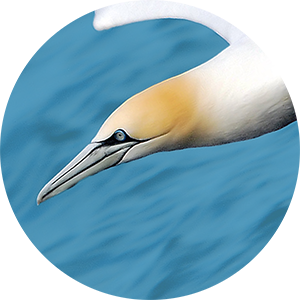
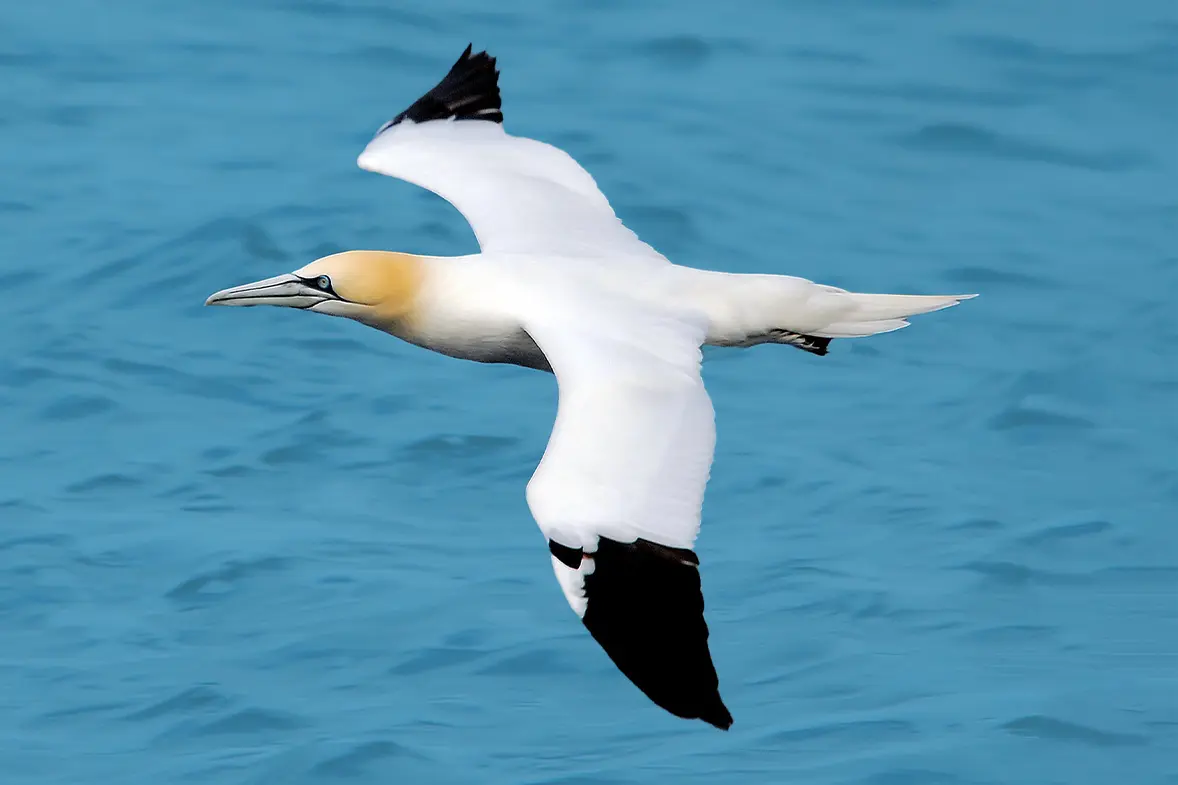
Irish Name: Gainead Scientific name: Morus Bassana Bird Family: GannetThe Northern gannet is a striking seabird, easily identified by its brilliant white plumage, ink-black wingtips, and a soft yellow wash across its head. Their flight is a rhythmic dance, gracefully alternating between powerful flaps and elegant glides just above the swells. To feed, these masters of the air circle high above the waves before tucking their wings to plunge headfirst into the ocean, reaching breathtaking speeds of up to 97 km per hour.
- Gannets plunge-dive into the sea from up to 40 metre height.
- They hit the surface of the water at speeds of up to 97kph.
- You’ll likely smell a gannet colony before you see it.
Guillemot
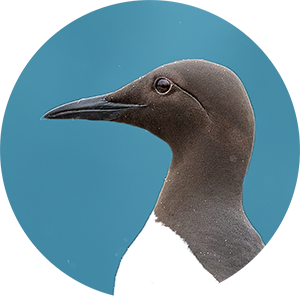
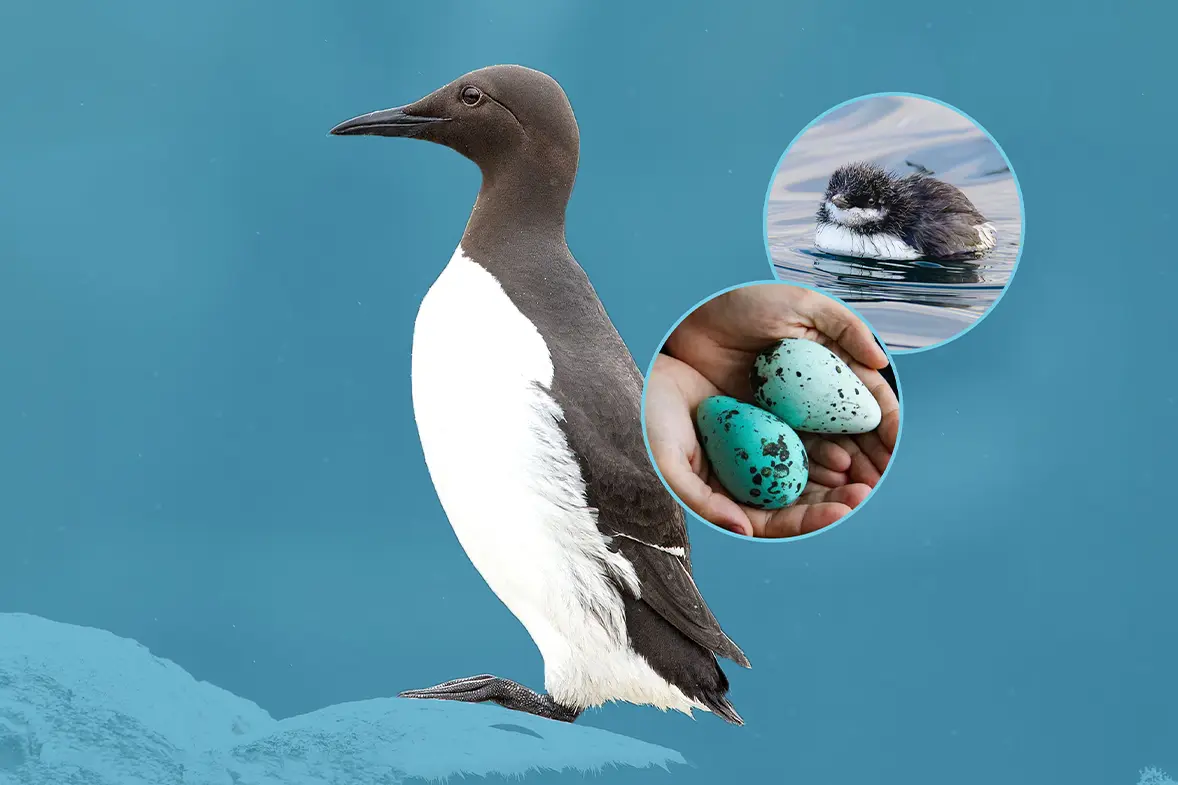
Irish Name: Foracha Scientific name: Uria Aalge Bird Family: AuksThe Guillemot is Ireland’s most abundant Auk. These resilient birds remain far out at sea for most of the year, returning to Irish shores only to breed. Their striking chocolate-brown upperparts contrast against snow-white bellies, creating a sleek, formal appearance. Crowded on narrow cliff ledges, they defend remarkably tiny territories, sometimes measuring just a few square centimetres, demonstrating an incredible adaptation to limited space.
- Weeks-old guillemot “jumplings” leap from cliffs into the sea.
- Guillemots are deep divers that feed on the bottom.
- Guillemots eggs are very large and beautiful.
Kittiwake
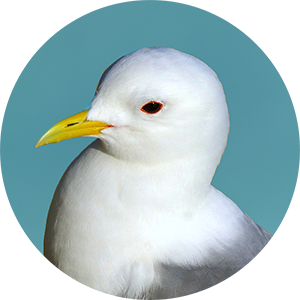
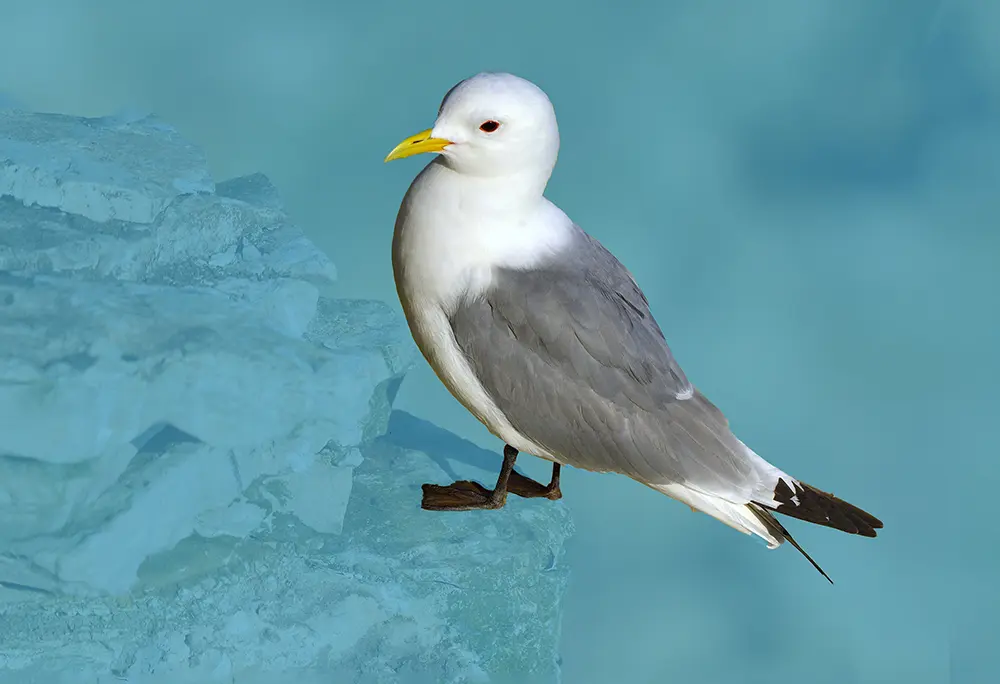
Irish Name: Saidhbhéar Scientific name: Rissa Tridactyla Bird Family: GullsKittiwakes are a summer visitor to steep coastal cliffs along all Irish coasts. Disperses to the open ocean in winter and less frequently seen. A small gull which is basically grey above and white below. Forms colonies, sometimes thousands strong, often with other seabirds. Noisy at colonies, giving a nasal call resembling its name. Can often be heard clearly over the sounds of other birds at seabird colonies.
- Kittiwakes live up to about 20 years old in the wild.
- They have black wingtips and short black legs and feet.
- They take their name from their shrill ‘kittee-wa-aaake’ call.
Marine Mammals & Sealife
Grey Seal
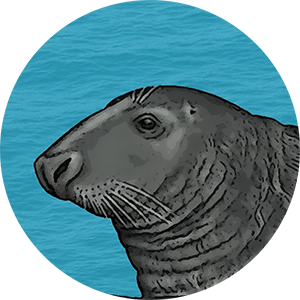
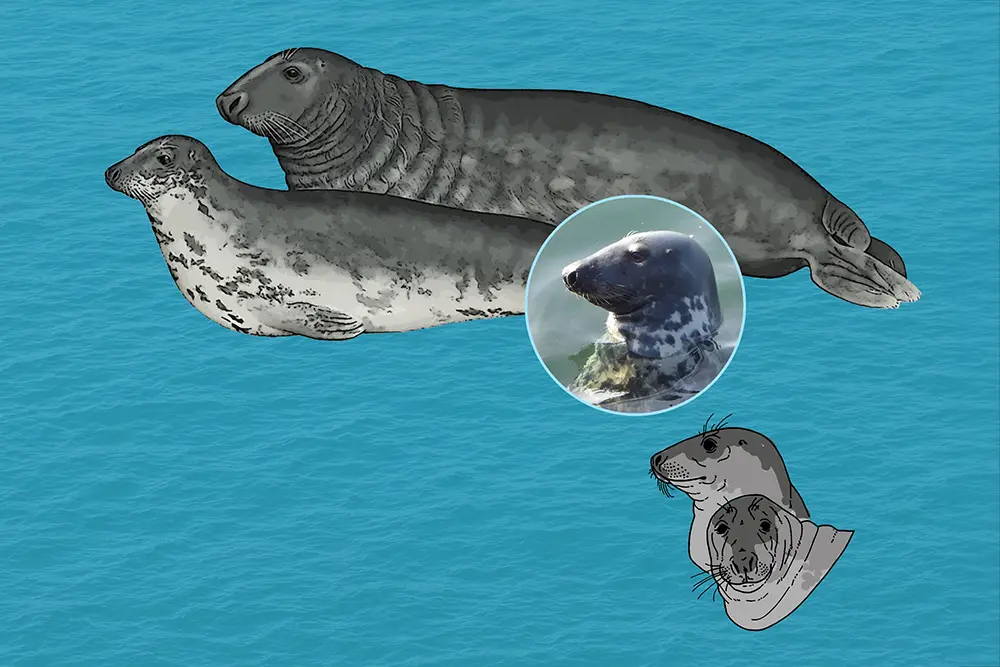
Irish Name: Ron Mor Scientific name: Halichoerus Grypus Group: MammalGrey seals are the larger of the two seal species found in Irish waters. Males known as bulls are larger and heavier than the female cows with mature bulls on average measuring up to 2.5 meters in length and weighing up to 300kg. Female adults will grow to 2 meters in body length and can weigh up to 180kg. These fascinating marine mammals are easily recognised by their distinctively long snouts and thick, warm blubber.
- Males have “Roman nose” and appear to have multiple chins.
- The grey seal pupping season is Autumn.
- Lifespan, 20-35 years females live the longest.
Common or Harbour Seal
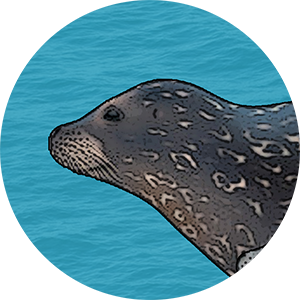
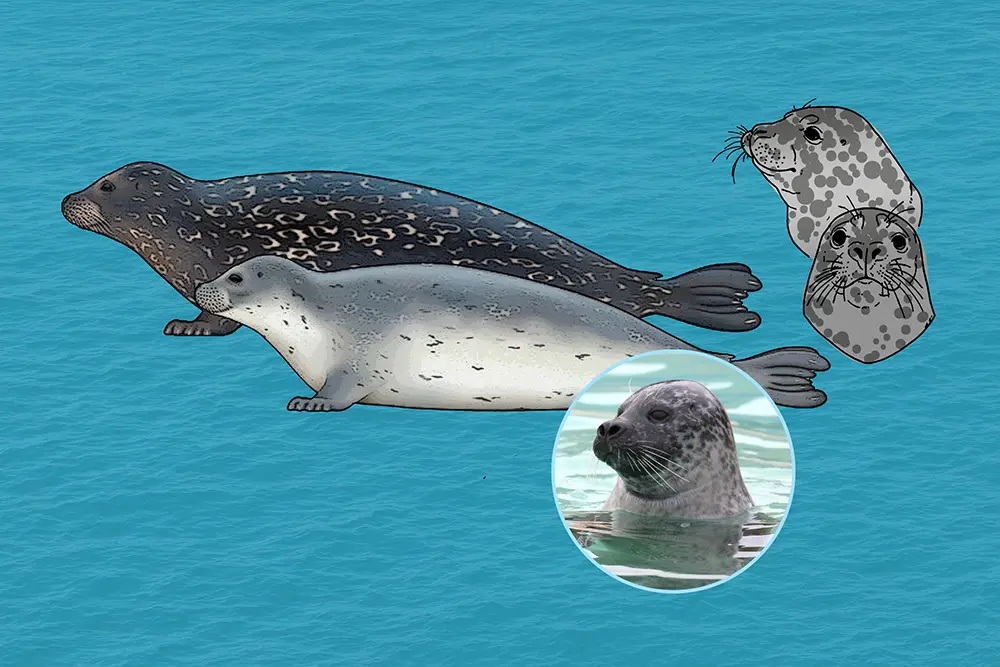
Irish Name: Ron Breacach Scientific name: Phoca Vitulina Group: MammalThe common seal, also known as the harbour seal is the smaller of Ireland’s two pinniped species. Males known as bulls will be larger and heavier than the female cows with mature bulls measuring up to 2m in length and weighing up to 150kg. Females grow to 1.8m in body length and generally weigh up to 130kg. They frequently rest on sheltered coastal shores, blending perfectly with rocky shorelines due to their beautifully spotted coats.
- Can stay underwater for 25 mins and dive up to 300 metres deep.
- Shorter concave face with eyes to the front.
- V-shaped nostrils that may appear to meet.
Harbour Porpoise
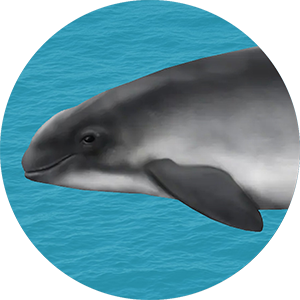
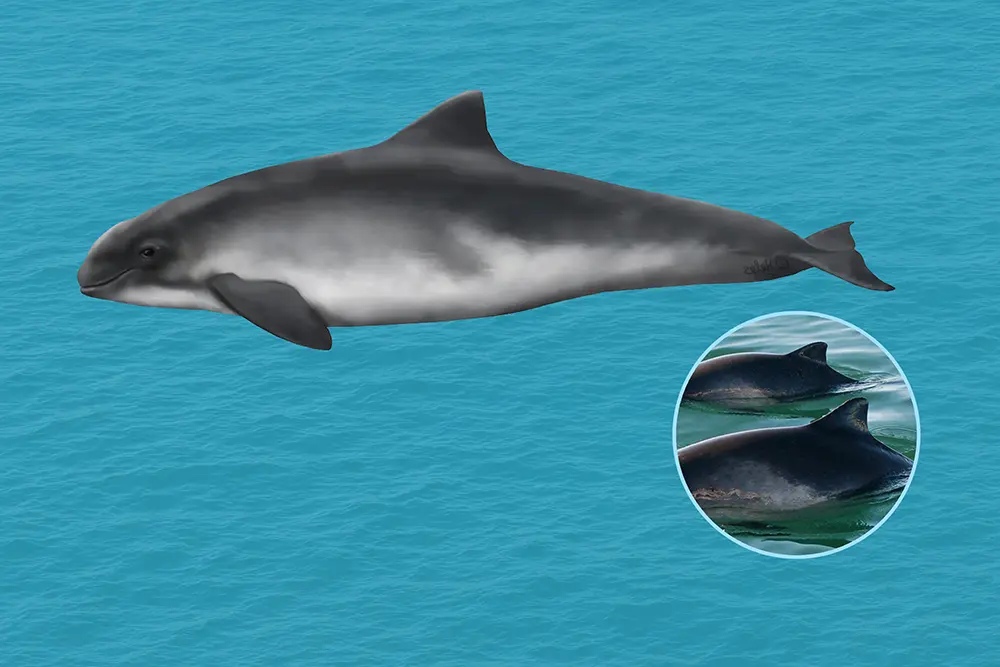
Irish Name: An Mhuc Mhara Scientific name: Phocoena Phocoena Group: MammalHarbour porpoises are small, elusive marine mammals known for their coastal habitat and distinct puffing sound when they surface for air. They are one of the smallest cetaceans, characterised by their blunt snout, small triangular dorsal fin and quiet nature. They are skilled hunters, using echolocation to find fish and other prey in their mostly shallow, coastal environments. These shy creatures typically travel in small groups and avoid any heavy boat traffic.
- They have a rounded head with no beak.
- Diet: Herring, sprat, poor cod and whiting.
- Their dorsal fin is small and triangular.
Common Dolphin
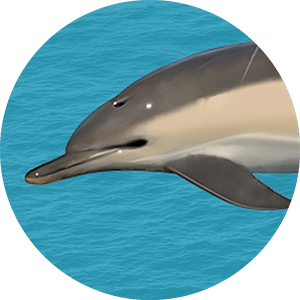
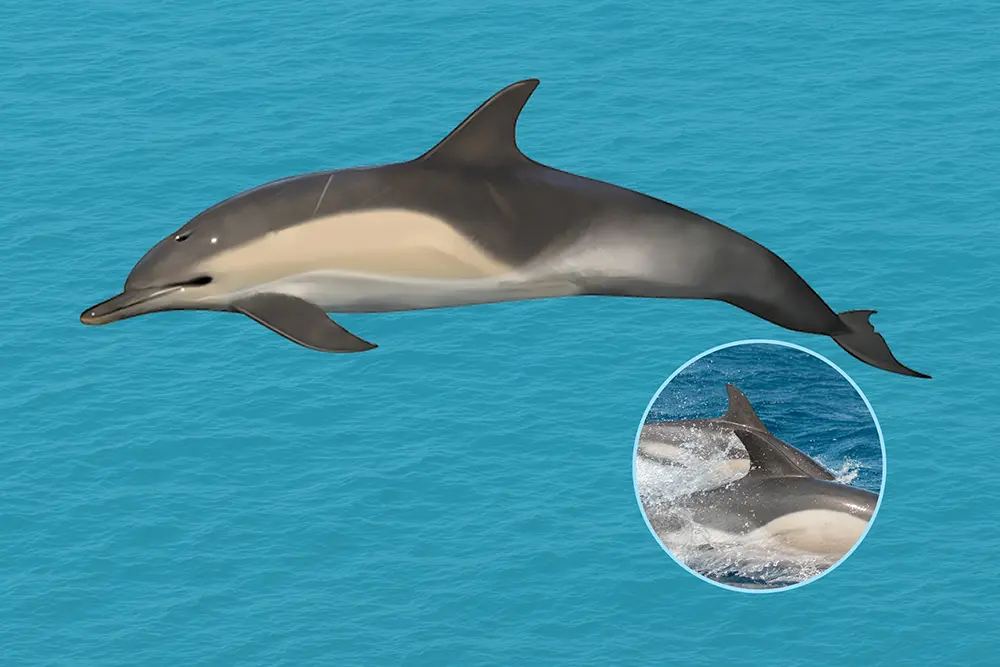
Irish Name: An Deilf Choiteann Scientific name: Delphinus Delphis Group: MammalA small, sleek dolphin with a narrow beak and falcate dorsal fin. Its sides feature a diagnostic “hourglass” pattern, yellow near the head and grey towards the tail. It is dark grey above with a pale underside. Common dolphins are one of the most frequently sighted cetaceans in Irish waters. Keep your eyes peeled on the ferry journey for a chance to spot these playful animals. If we see them, we’ll get you close.
- Breaching regularly takes place along with side slaps.
- Called common dolphins as they have been seen in every ocean.
- These boisterous creatures often ride the bows of large boats.