
A Seasonal Guide
If you think you need to travel to the furthest reaches of the Atlantic coast to see Ireland’s most iconic seabird, think again. Just a short boat ride from Howth Harbour lies a thriving wildlife sanctuary. For those looking for puffin watching in Dublin, Ireland’s Eye Ferries offer a front-row seat and answer the question of where to find puffins in Dublin!
Why Ireland’s Eye is a Birdwatcher’s Paradise
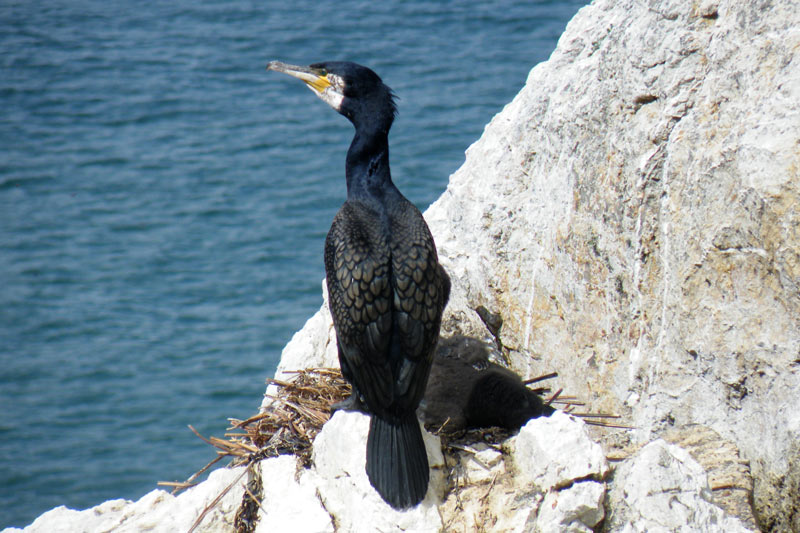
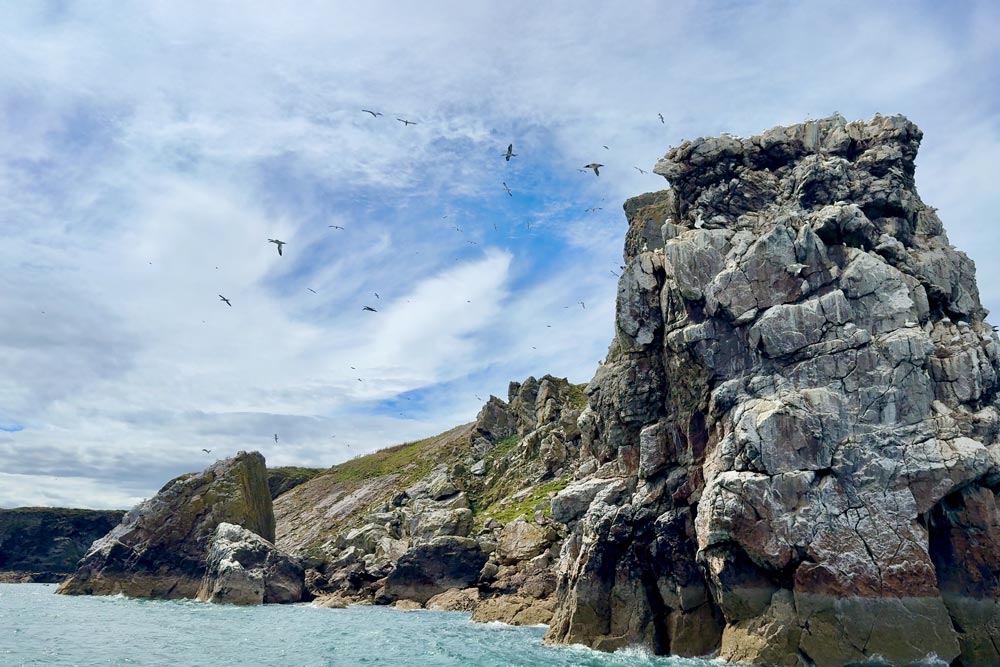
Part of the Dublin Bay UNESCO Biosphere, Ireland’s Eye is more than just a scenic backdrop; it is a vital nesting ground. The island’s steep eastern cliffs and isolated sea stacks provide a fortress for thousands of birds. While the colourful puffins are the stars of the show, they share the stage with a massive Gannet colony, along with Guillemots, Razorbills, and Cormorants. Below the cliffs, you’ll almost always spot the inquisitive heads of our resident Grey Seal colony bobbing in the swell, making every trip a masterclass in Irish marine biodiversity.
The “Puffin Calendar”
When to Visit Ireland’s Eye
Timing is everything. Puffins are seasonal visitors who spend most of their lives at sea.
- Late March – Early April: The first scouts arrive to reclaim their burrows.
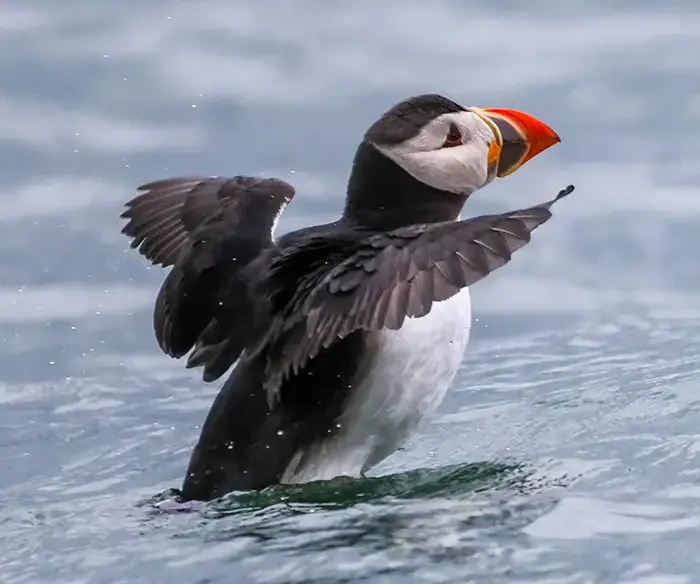
- May – June (Peak Season): This is the best time for puffin watching. The birds are busy fishing and sand eels can often be seen dangling from their orange beaks.
- July:The “pufflings” begin to fledge. By late July, the colonies start to thin out.
- August: The puffins head back to the open ocean, leaving the cliffs to the gannets until next spring.
Photography Tips
Photographing wildlife from a moving deck requires a bit of technique. To bring home that “National Geographic” shot, keep these tips in mind:
- Lens Selection: A focal length of 200mm to 400mm is the “sweet spot” for capturing birds on the cliffs without losing the context of the rugged landscape.
- Shutter Speed: Even on a calm day, the boat has a subtle rhythm. Keep your shutter speed high—at least 1/1000 or faster—to freeze the action and prevent motion blur.
- Stabilisation: While a tripod is too cumbersome on a boat, a monopod can help, or simply use your body as a shock absorber by keeping your knees slightly bent.
- Look for the “Fly-bys”: Puffins are fast flyers. Instead of just focusing on the cliffs, watch the water’s surface; they often “skitter” across the waves before taking off.
Ready to Meet the Locals?
Our dedicated tour guides know exactly where to Find Puffins in Dublin. Whether you are a professional photographer or a family looking for a unique day out, our tours are designed to get you as close as possible to the magic without disturbing the natural habitat in Dublin Bay’s UNESCO Biosphere.
