
When the Seabirds Return to Raise Their Chicks
From the cliffs of Howth, look out across the water and you’ll see the small, rugged island of Ireland’s Eye. For much of the winter, it appears still and empty. But as spring arrives, something remarkable begins to happen. The island comes alive.
Each year, thousands of seabirds return to Ireland’s Eye to nest, lay eggs and raise their chicks on its rocky ledges and grassy slopes. It becomes one of the most important seabird breeding sites on Ireland’s east coast — and one of the most fascinating natural spectacles you can witness from the Howth Cliff Walk or from the water.
The First Arrivals You’re Likely to See
Guillemots
Often among the earliest to return, guillemots gather in large numbers along narrow cliff ledges. From a distance, they look like dark shapes packed tightly together on the rock. They stand upright, almost penguin-like, and once they arrive, remain close to their chosen nesting site.
Plan your visit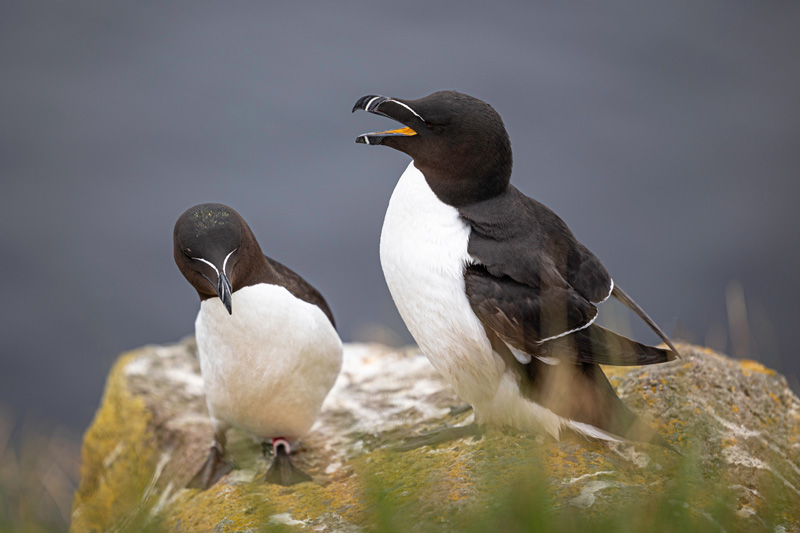
Razorbills
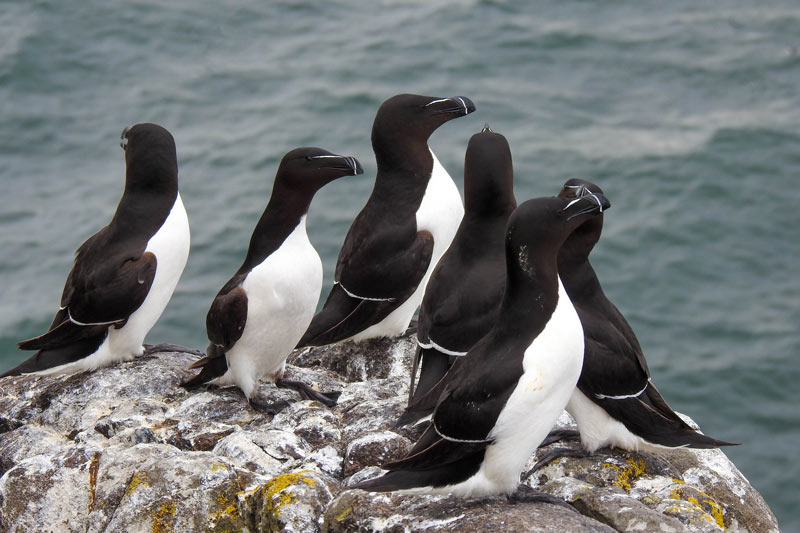
Close cousins of the guillemot, razorbills also arrive early in the season. With their distinctive black bill marked by a sharp white line, they perch on the same rocky ledges and begin pairing up for nesting. These monochromatic birds often return to the same lifelong mates, adding to the crowded, noisy atmosphere of the coastal colony.
Cormorants
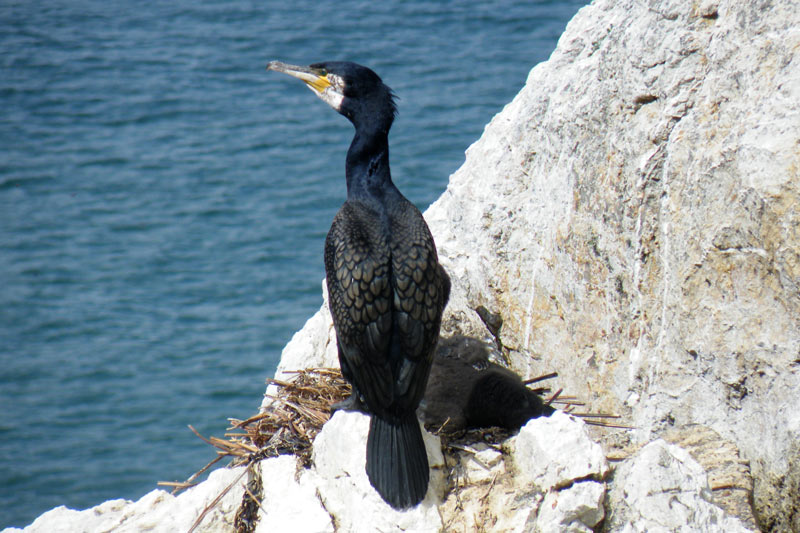
Cormorants are a familiar sight around Howth all year, often seen standing on jagged rocks with their dark wings spread wide to dry, silhouetted against the Irish Sea while they rest between deep dives into the cold water to hunt for local fish. These birds remain remarkably still, showing off their striking emerald eyes and prehistoric profiles.
Gulls and Kittiwakes
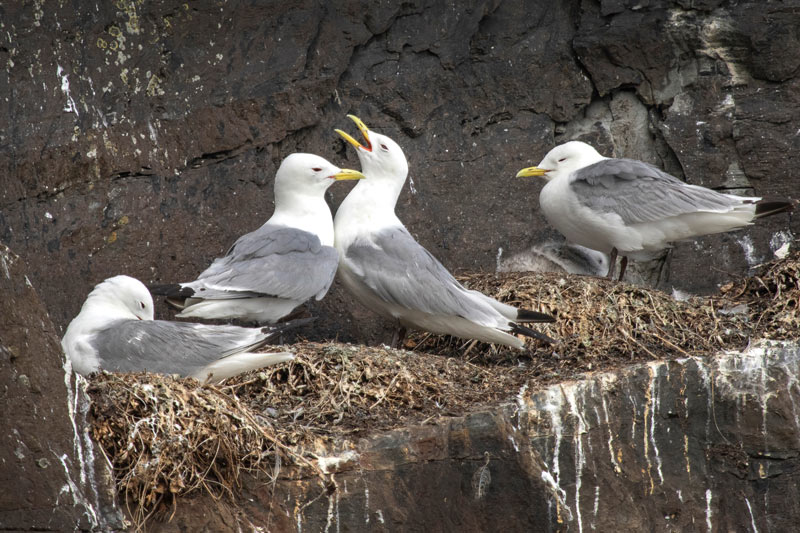
Gulls are present year-round, but in spring their behaviour changes. Kittiwakes return to their steep cliff nests, bringing much more chaotic noise and frantic movement to the rocky island as they settle in and begin their energetic annual breeding rituals.
Puffins
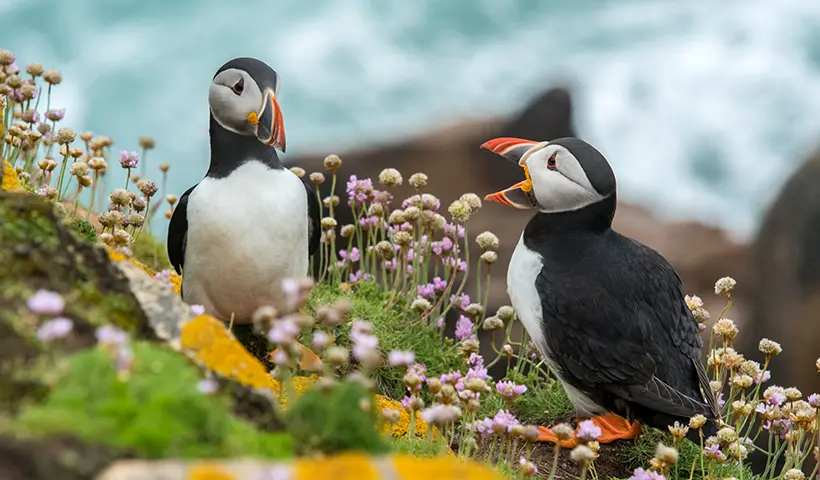
Puffins usually return from the open Atlantic between late March and early April to begin the breeding season, sporting vibrant orange beaks and clown-like faces as they settle into grassy clifftop burrows to safely raise their single, very hungry chicks.
It’s a noisy, chaotic and beautiful scene — a sure sign that the natural cycle of the Irish Sea is in full swing once again.
