A Wildlife-Friendly Puffin Tour
At Ireland’s Eye Ferries, we provide a responsible way to view puffins. We do not land on Ireland’s Eye, helping to protect sensitive nesting areas. On Ireland’s Eye, puffins nest in burrows and crevices, raising just one chick each year. This makes every breeding season critical. Even small disturbances can cause adults to abandon nests, leaving eggs or chicks vulnerable.
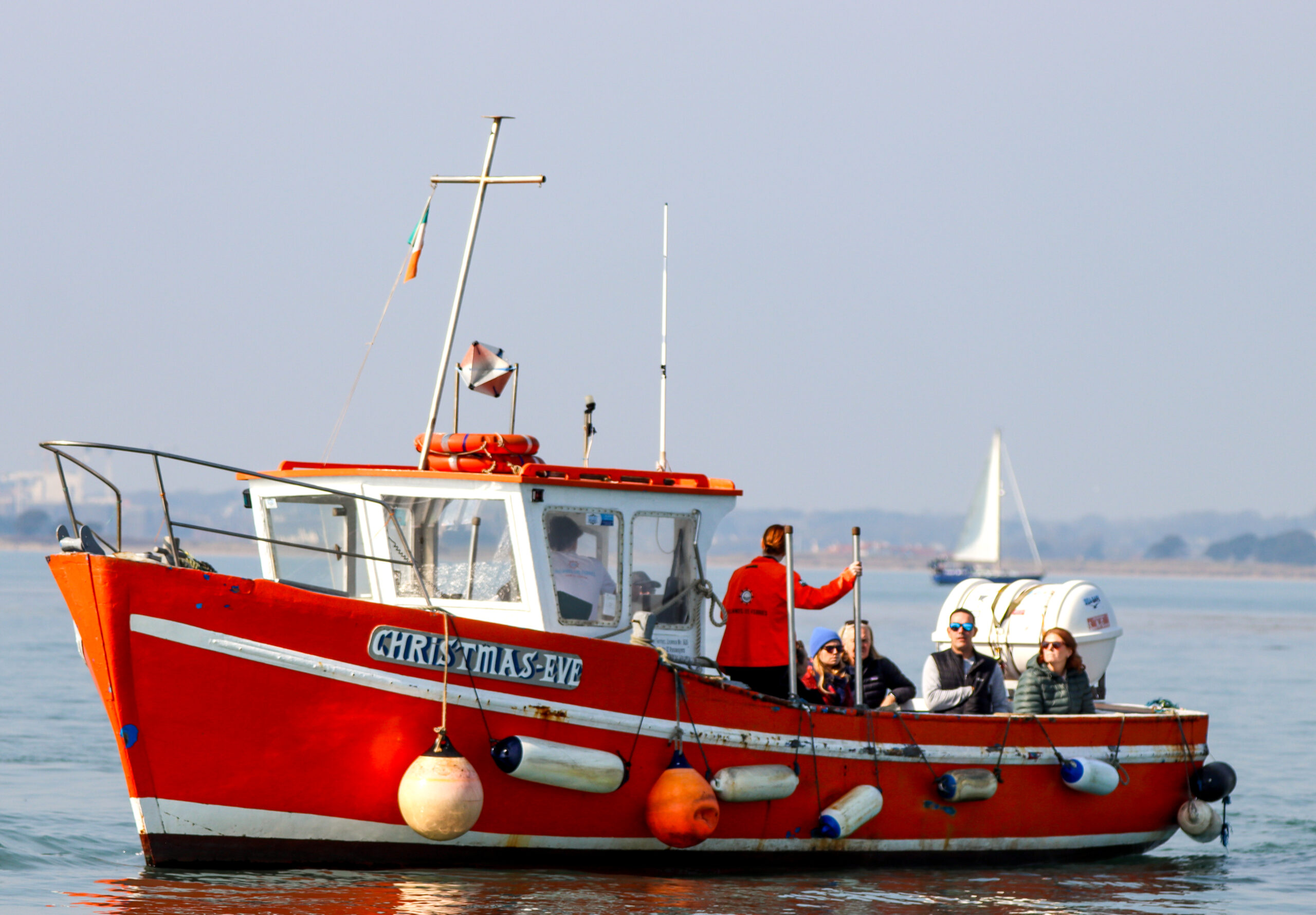
Instead of landing on the island, our small boats bring you close to the cliffs, allowing you to enjoy incredible views of puffins and other seabirds—without disturbing them. It’s the perfect balance of up-close wildlife viewing and conservation.
Puffins are on the High Conservation Concern list with Birdwatch Ireland.
Puffins Need Protection
Puffins lay just one egg each year and are highly sensitive to disturbance. In Ireland, their numbers are declining due to:
- Reduced food supply from overfishing
- Risk of avian flu
- Human disturbance during nesting season
By choosing a tour that respects wildlife, you help protect these birds and their habitat.
WILDLIFE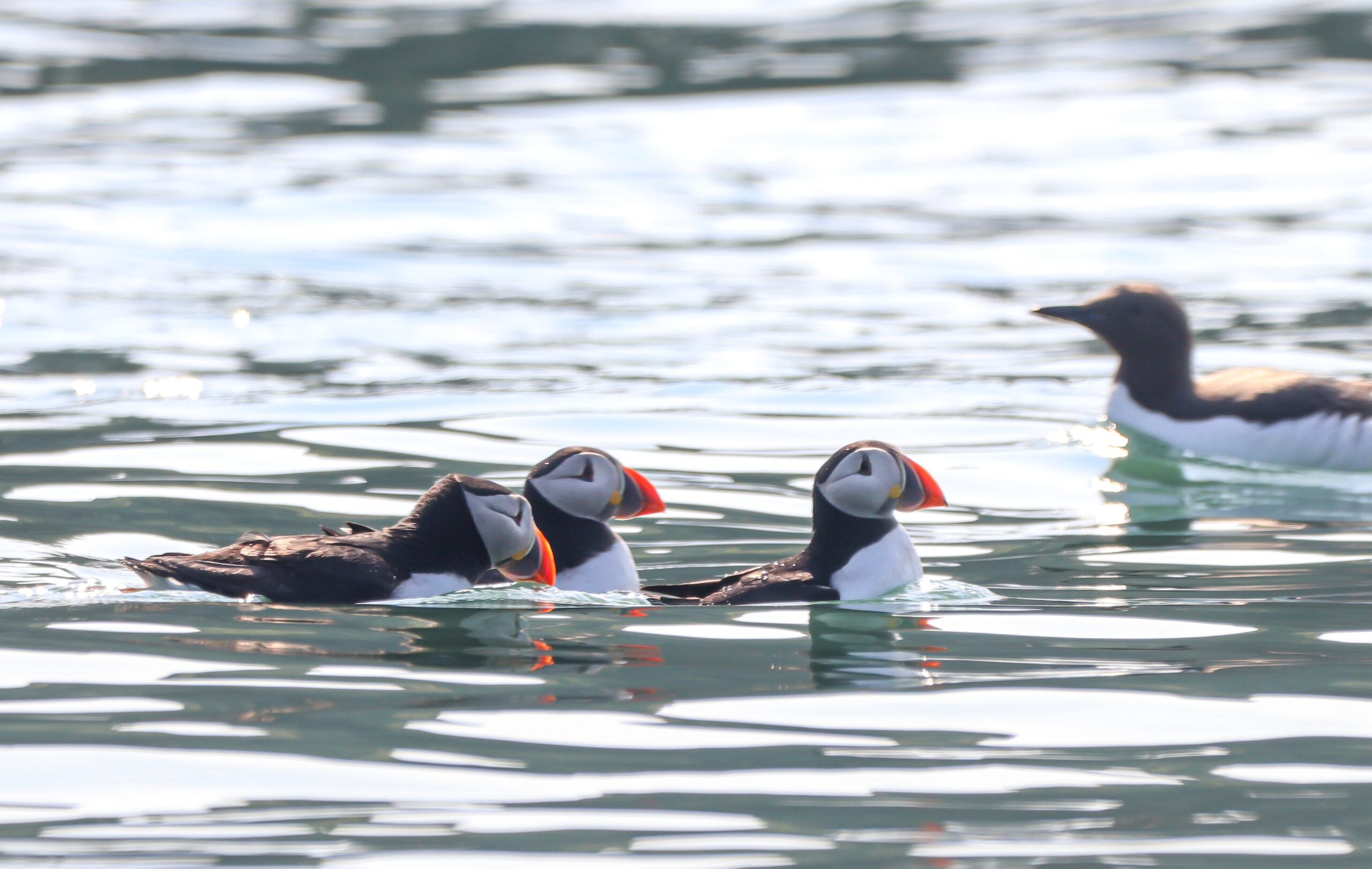
Experience Puffins the Responsible Way
Seeing puffins on Ireland’s Eye is a truly unforgettable experience. By staying on the water and observing from a safe distance, you can enjoy these incredible birds while helping to ensure their future in Dublin Bay. Don’t forget to bring your camera and binoculars.
When the Seabirds Return to Raise Their Chicks
From the cliffs of Howth, look out across the water and you’ll see the small, rugged island of Ireland’s Eye. For much of the winter, it appears still and empty. But as spring arrives, something remarkable begins to happen. The island comes alive.
Each year, thousands of seabirds return to Ireland’s Eye to nest, lay eggs and raise their chicks on its rocky ledges and grassy slopes. It becomes one of the most important seabird breeding sites on Ireland’s east coast — and one of the most fascinating natural spectacles you can witness from the Howth Cliff Walk or from the water.
The First Arrivals You’re Likely to See
Guillemots
Often among the earliest to return, guillemots gather in large numbers along narrow cliff ledges. From a distance, they look like dark shapes packed tightly together on the rock. They stand upright, almost penguin-like, and once they arrive, remain close to their chosen nesting site.
Plan your visit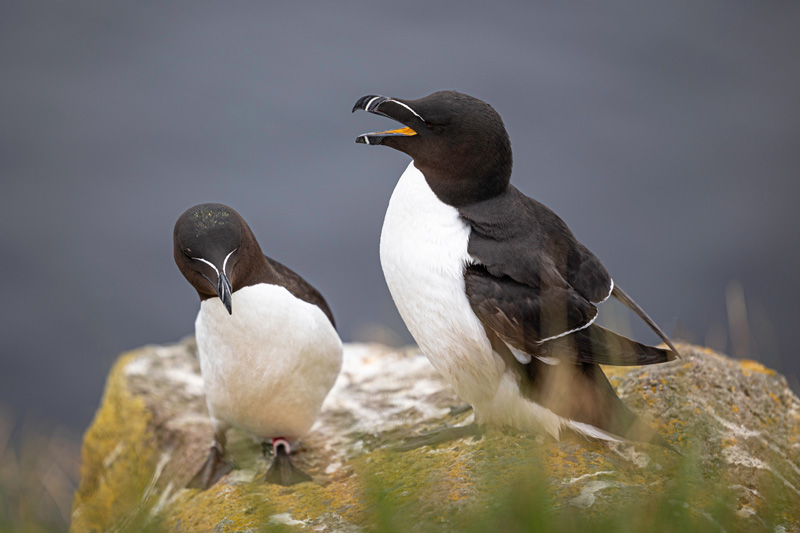
Razorbills
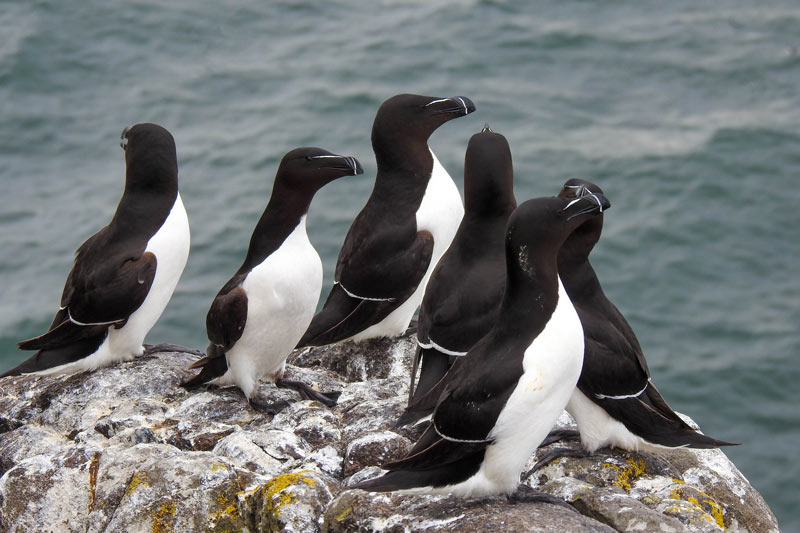
Close cousins of the guillemot, razorbills also arrive early in the season. With their distinctive black bill marked by a sharp white line, they perch on the same rocky ledges and begin pairing up for nesting. These monochromatic birds often return to the same lifelong mates, adding to the crowded, noisy atmosphere of the coastal colony.
Cormorants
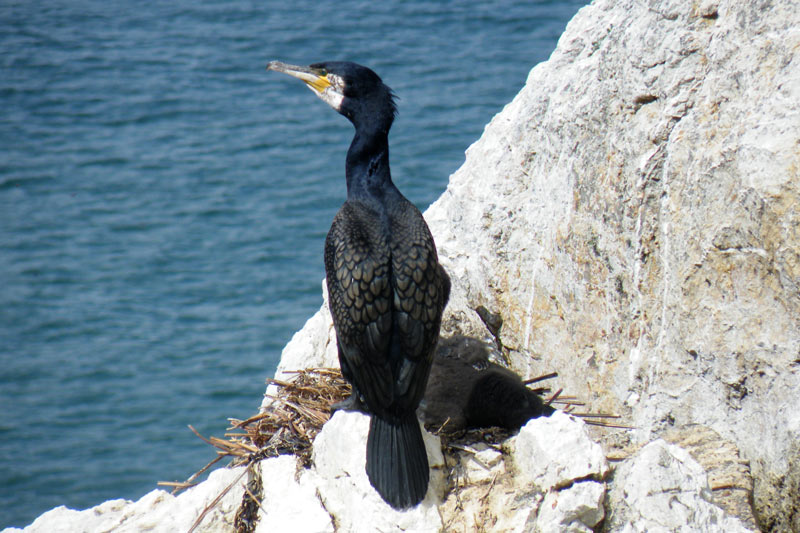
Cormorants are a familiar sight around Howth all year, often seen standing on jagged rocks with their dark wings spread wide to dry, silhouetted against the Irish Sea while they rest between deep dives into the cold water to hunt for local fish. These birds remain remarkably still, showing off their striking emerald eyes and prehistoric profiles.
Gulls and Kittiwakes
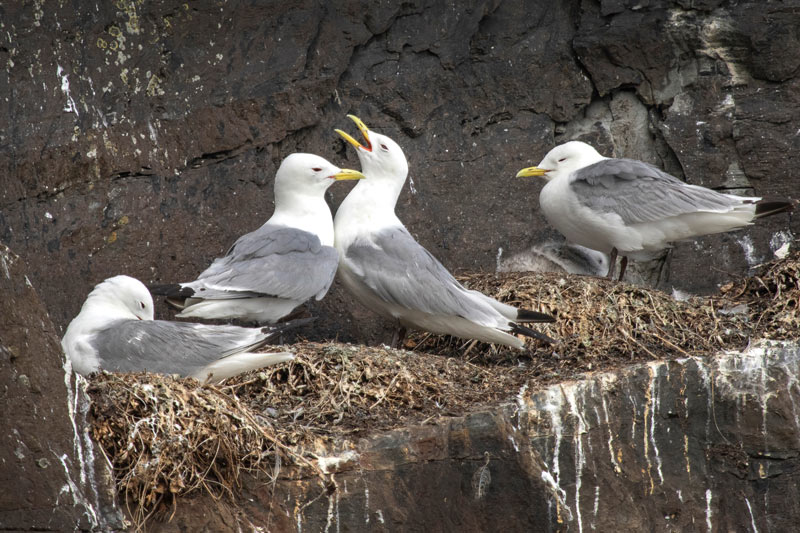
Gulls are present year-round, but in spring their behaviour changes. Kittiwakes return to their steep cliff nests, bringing much more chaotic noise and frantic movement to the rocky island as they settle in and begin their energetic annual breeding rituals.
Puffins
Puffins usually return from the open Atlantic between late March and early April to begin the breeding season, sporting vibrant orange beaks and clown-like faces as they settle into grassy clifftop burrows to safely raise their single, very hungry chicks.
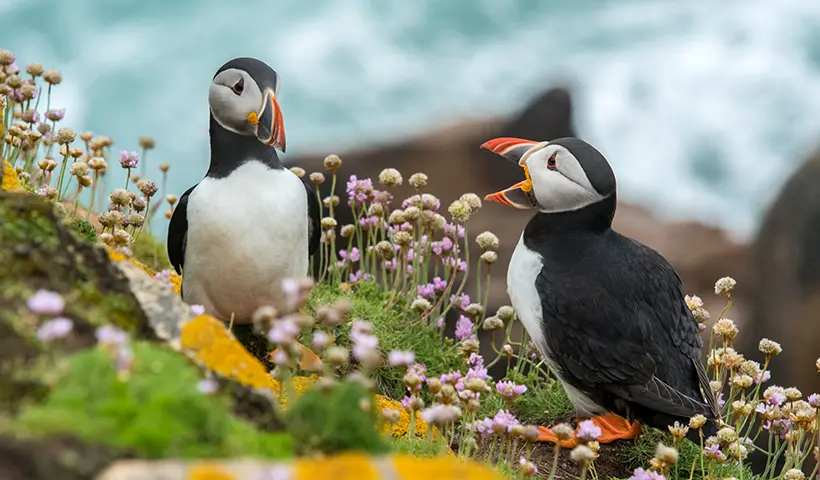
It’s a noisy, chaotic and beautiful scene — a sure sign that the natural cycle of the Irish Sea is in full swing once again.
Nature, Wildlife & Conservation
If you love coastal scenery, wildlife and nature that feels bigger than the city, the Dublin Bay Biosphere is one of the most fascinating places you can explore while visiting Dublin — and it’s right on your doorstep in Howth.
This internationally recognised area blends urban life with thriving natural habitats, making it one of the few places in the world where a capital city and a living ecosystem coexist so closely.
Biospheres are designated by UNESCO for their rich biodiversity and for the way communities work together to create a balanced relationship between people and nature. Importantly, this designation brings no new regulations — it is about collaboration, sustainability and responsible tourism.
Find out more: UNESCO Dublin Bay Biosphere
Howth Adventures
Howth Adventures is a proud supporter and member of the Dublin Bay Biosphere Partnership, working with local businesses to promote more sustainable tourism and contribute to the long-term protection of this unique environment through the Biosphere Charter.
Learn More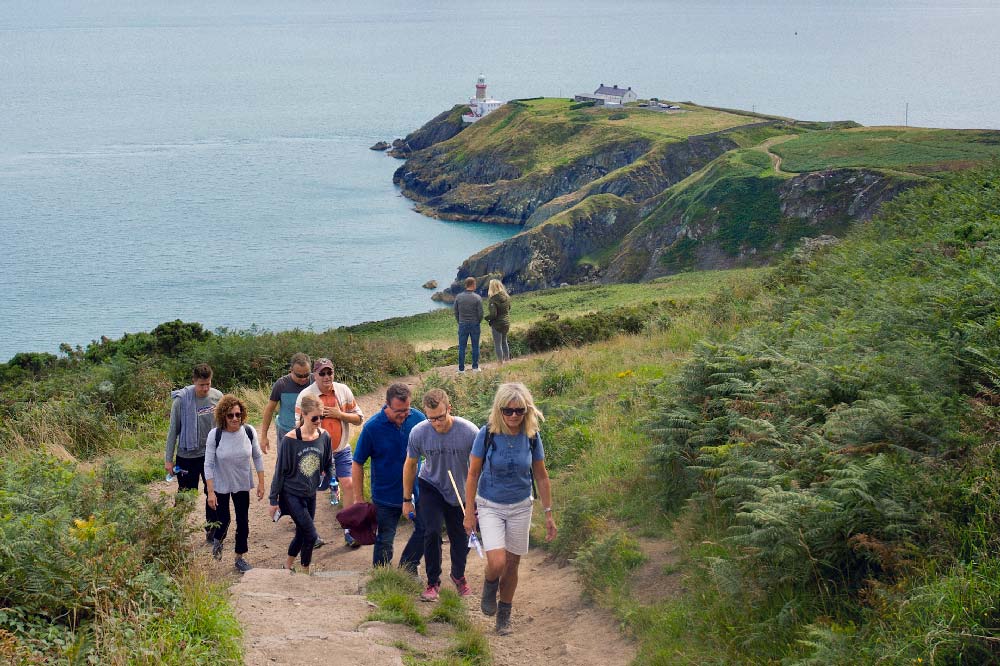
Explore Howth’s Stunning Coastline Without Disturbing Ireland’s Eye
Discover Howth’s Coastal Beauty
Many visitors assume the only way to experience Ireland’s Eye is to step onto the island. In reality, landing there can disturb important nesting and migratory birds that rely on this fragile habitat.
The Howth Coastal Boat Tour offers a more sustainable and rewarding way to experience the island and coastline — allowing you to observe wildlife up close without disturbing it.
Sustainable Sightseeing Adventure
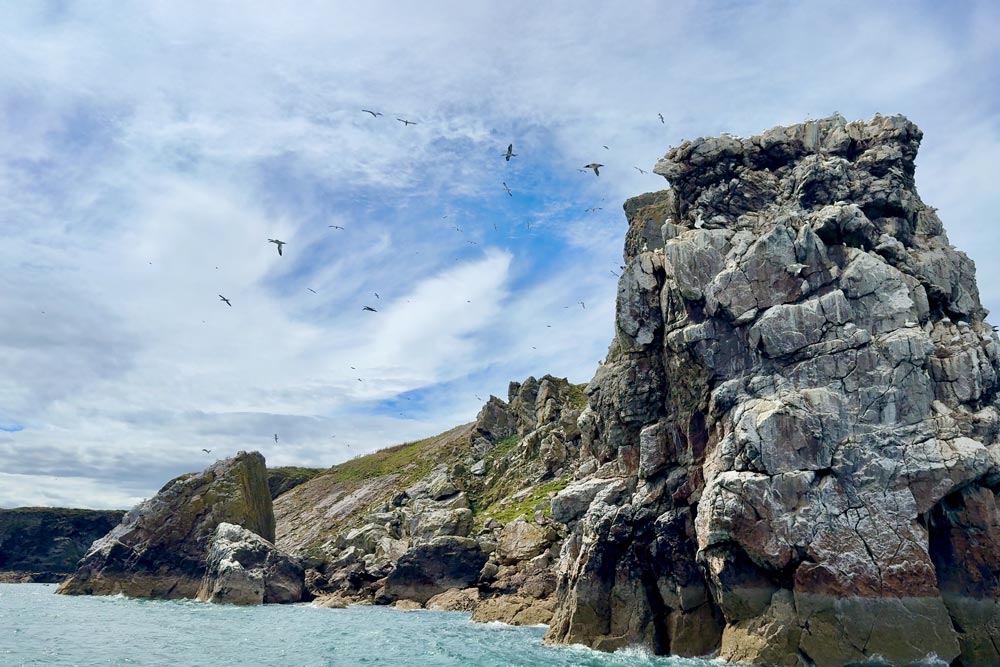
From the water, you gain a unique perspective of the cliffs, caves and seabird colonies while leaving no trace behind. As you glide across the bay, your guide shares local knowledge, wildlife insights and stories of Howth’s maritime history. You’ll pass beneath nesting ledges where seabirds gather in their thousands during breeding season, witnessing this remarkable spectacle from a respectful distance.
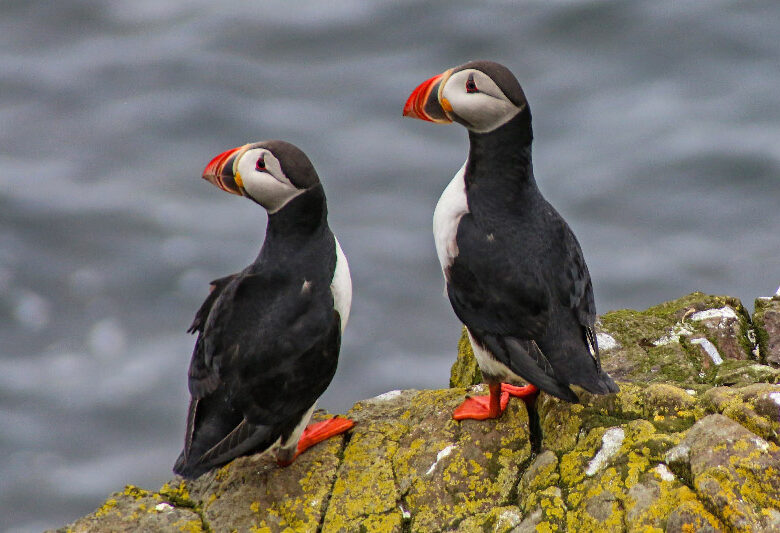

Encounter Nesting Birds
Tens of thousands of seabirds nest on Ireland’s Eye each year. Viewing them from the boat protects their habitat while giving you an unforgettable vantage point. This approach to sightseeing not only protects the island but creates a richer, more immersive experience for visitors.